About Advisor Innovation Lab

The money side of advice has decades of software behind it. Human understanding still depends on what one advisor happens to know and remember.

Planning engines, projections, portfolio tools, and tax optimization have had decades of engineering behind them. The other half of advice, where an advisor actually understands the person in front of them, has had nothing like it. We built Meeting Intelligence to change that.
Four things are hitting wealth management at the same time. Any one of them would strain the way firms work today.

110,000advisors expected to retire this decade

The people who hold the relationships are leaving.

Roughly 110,000 advisors are expected to retire this decade. That is about 38% of the workforce, and they manage about 42% of industry assets. People call it a staffing shortage, but it's really a knowledge problem. In most firms the deepest understanding of a client lives in one person's head, and when that person goes, the firm keeps the accounts and loses the understanding.

McKinsey, cited in Russell Investments' 2026 Value of an Advisor study. Cerulli puts asset loss at roughly 22% when an advisor retires, 18% when one changes firms, and 11% on reassignment.

349RIA deals in 2025, up 26%

The firms keep changing hands too.

When a firm gets bought, the understanding of each client gets lost the same way. Every acquisition, every merger, every reassignment hands a household to an advisor who knows the accounts but doesn't know the person. Firms buy the relationships, then have to earn them again, one meeting at a time.

RIA deal activity hit 349 transactions in 2025, up 26% over the year before (Berkshire Global Advisors), and 41% of RIA firms have bought or merged with another firm in the past five years (Schwab 2025 RIA Benchmarking Study).

81%of inheritors plan to switch firms

Clients expect to be known, and their children expect it even more.

Clients want advice that connects to their actual life: the retirement that is really about identity, the inheritance that is really about family, the business sale that is really about letting go. When a relationship ends, performance is rarely the reason. And the people inheriting the money have no relationship with the firm that served their parents. The firm has to earn their trust years before the money moves, not on the day it does.

Investors cite breach of trust (61%) above poor performance (54%) as reasons to end an advisory relationship (CapIntel, 2025). A study of 2,500+ client reviews found 89% of what clients praise has nothing to do with investment performance (Wealthtender). Capgemini's 2025 World Wealth Report found 81% of inheritors plan to switch firms within one to two years of inheriting.

Judgment & Contextwhat advisors say will matter most, ahead of automation

AI is changing what makes an advisor valuable.

Plans, projections, and analysis are getting fast and cheap to produce. That does not make advisors less valuable. It moves their value to judgment, context, and whether a client feels known. Advisors can see it coming. When they were asked what would matter most for serving the next generation, their top answers were a full picture of the client and insight they can act on. Automated meeting summaries and emails ranked below both.

Capgemini, 2025 World Wealth Report. Russell Investments' 2026 study puts it plainly: "The differentiator is no longer access to information, but the ability to apply it with judgment, context and discipline."

Put them together and this is the picture.

Relationships are changing hands faster than ever, because advisors are retiring and firms are being bought at the same time.

Clients, and especially their children, expect to be known.

The plans and projections that used to make an advisor valuable are getting cheap to produce.

The firms that come through this well won't be the ones with the best returns or the fastest AI. They'll be the ones whose clients still feel known.

Firms aren't short of information about their clients. They're drowning in it.

Firms already have meeting notes, planning documents, CRM records, emails, and years of history on every client. The information was never missing. What's missing is anything that turns it into understanding.

Today the only thing that does that reliably is an advisor who has seen it all before: the one who can tell when a practical question has a worry underneath it, or when a retirement conversation is really about identity. That instinct is real, but it lives in particular people. Those people are spread unevenly across a firm, and they're retiring.

Wealth management doesn't have a data problem.
It has an interpretation problem.

That is the problem we built Meeting Intelligence to solve. It interprets what a firm already knows about a client and turns it into a Meeting Intelligence Brief the advisor reads before the meeting.

Why we're building this together.

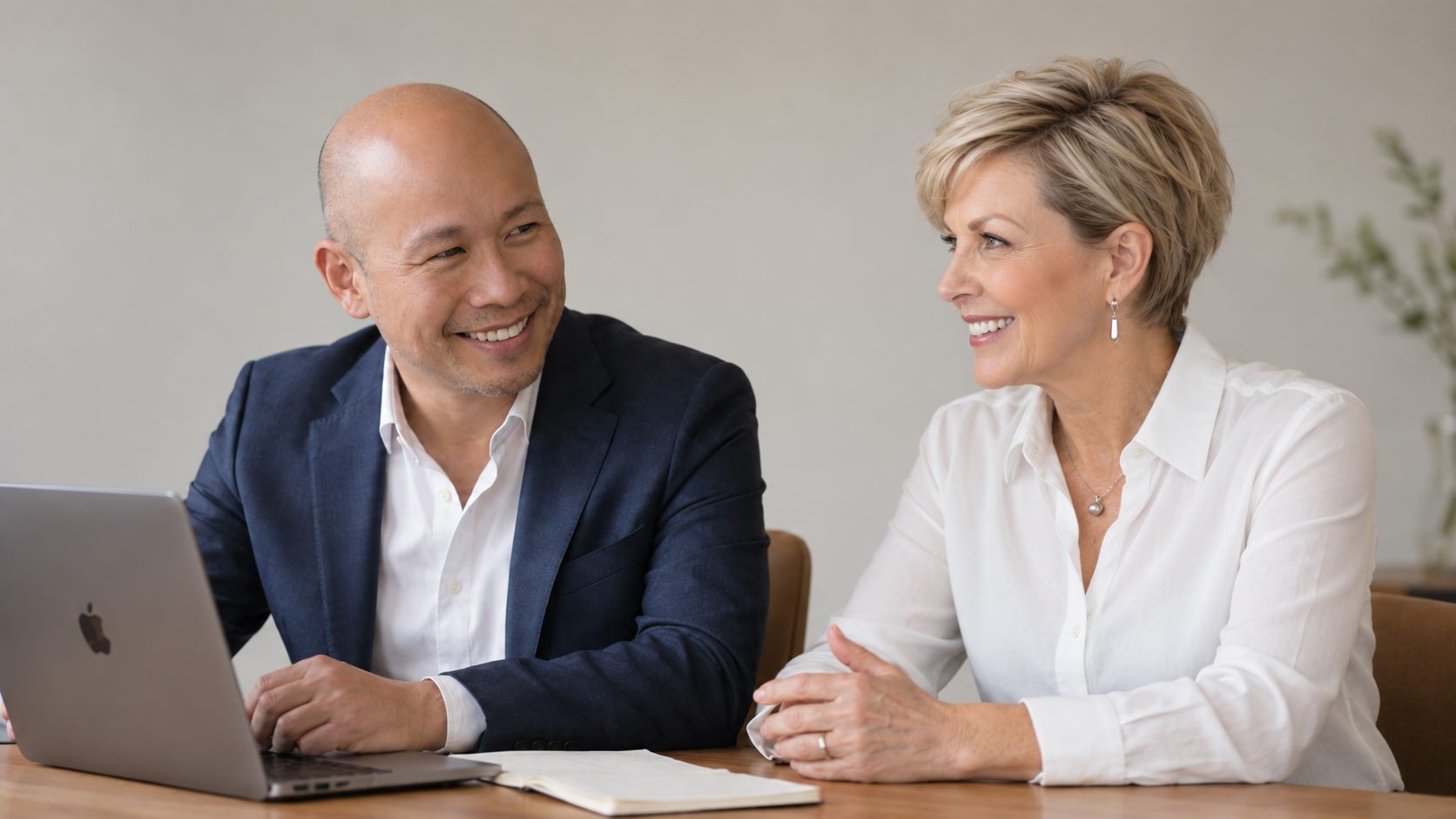
Kathleen Mundy and Yasmin Nguyen working together at a desk
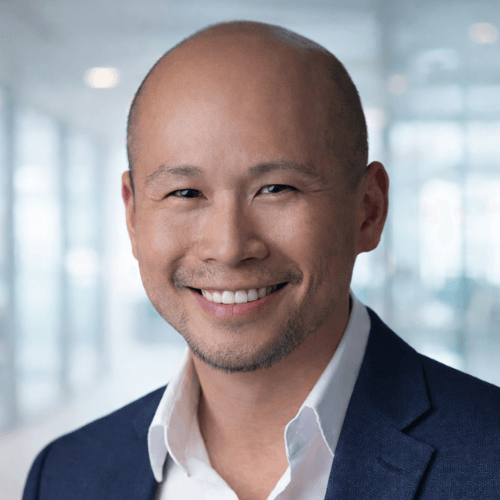
Yasmin Nguyen

Yasmin Nguyen

Co-founder and CEO

  • Arthur Andersen, enterprise systems and change management
  • Two decades running businesses
  • Navigating Transitions certification, Modern Elder Academy
  • AI business strategy certificate, MIT Sloan

Yasmin learned early, on the change management teams at Arthur Andersen, that a new system succeeds or fails on whether the people expected to use it ever change how they work. He carried that into two decades of running businesses of his own, and by the end of them he had burned out. He walked away from his desk and spent eighteen months driving across America, trying to figure out what makes a life feel worth living. He came back having found joy again in small things, and wrote a book about it, The Game of Joy. Kathleen read it, got in touch with him, and endorsed it.

Then he watched his own parents move through retirement: financially secure, and quietly coming apart. His mother's health and memory were declining. His father became her full-time caregiver, and along the way lost his sense of purpose, his confidence, and his circle of people. The planning had covered the money. Nothing had prepared them for the rest. The rest is what he builds now.

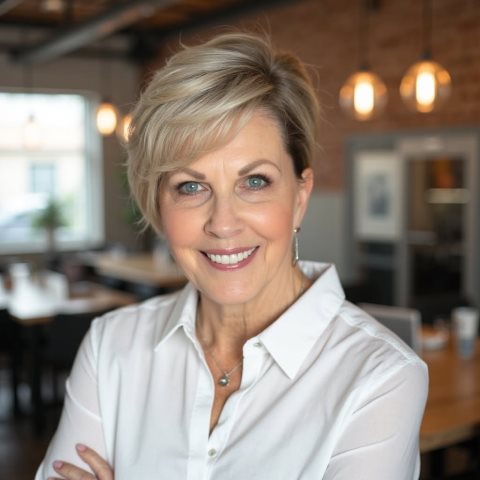
Kathleen Mundy

Kathleen Mundy

Co-founder and COO

  • Built a multimillion dollar business from a modest investment
  • Ran it until she retired at seventy
  • A wealth management client for decades

Kathleen was as prepared for the financial side of retirement as anyone could be. What she didn't expect were the quieter questions: who am I now, what is this time actually for, why is the house so silent. She looked for help and found an industry built to manage her portfolio and almost nothing built to guide her through the rest of it.

She had also spent decades as a client, through three advisors. The first two she remembers mostly for what was missing: straight answers, and any sense that someone had asked about her life. The third got it right. He knew her, he knew what she had built and why it mattered to her, and he asked about that before he asked about the portfolio. Then he retired. The advisors who followed him inherited her accounts and none of what he knew, and she found herself explaining her own life from the beginning. In the end she moved her accounts. She co-founded this company so the next client would never have to start over. The money wasn't the problem. Being unknown was.

We are not building this alone. Software development advisors guide what we build, and a group of industry leaders keeps us honest about the business, informally for now rather than as a named board. They include a founder who has led technology teams building software for financial professionals since 1999, a wealth advisor and branch manager of thirty-three years who now coaches advisory teams through succession and change, and the co-founder of a national wealth management firm he spent twenty-six years building.

If you would rather read this site the way our product reads a client, here it is as a brief.

Here's why we are building for advisors.

We're twenty years apart in age, and we kept arriving at the same conclusion from opposite directions: the money gets managed, and the person gets missed. Kathleen had lived it as a client and as a retiree, after decades of running a business. Yasmin had watched it happen to his parents, and knew how to build software.

So we started out trying to help people in transition directly. Then we noticed that the advisors already sitting across from those people were the better route, because helping one advisor touches hundreds of lives. That is why we build for advisors rather than for the families we first set out to help. Three years of advisor interviews, conferences, research, and feedback from firms turned that idea into the product.

Here's what we believe.

Purpose over products.

We measure success by the lives we touch, not the features we ship. A retirement, a diagnosis, a divorce, the loss of a spouse: these are the moments a client remembers how their advisor guided them, and we build for those moments.

AI should help advisors be more human.

The best use of AI is to deepen the understanding, trust, and empathy between an advisor and a client, not to automate the relationship away.

Trust is built through understanding.

A perfect transcript of every meeting still won't tell you who someone is. Understanding is the hard part, and it's the part that matters.

Innovation only counts if advisors can use it.

We turn complexity into clarity: insight an advisor can act on before the next meeting, not another dashboard.

The future of this profession will be built together.

We co-create with advisors, firms, researchers, and practitioners, and we treat feedback as the most valuable thing we receive.

The point is a joyful, meaningful life.

For the client, and for the advisor who guides them through their hardest years. Fulfillment, not transactions, is the real measure of success.

How we handle client data →

Why we call this a Lab.

Because most of this work is research, and only some of it is software. A feature can ship in a quarter. Understanding how a person moves through the hardest year of their life takes years. That understanding is what advisors are missing, so that is where we put our time.

Before Meeting Intelligence was a product, it was three years of studying how people actually move through life transitions. We read what practitioners and researchers had written. We interviewed advisors who have sat through hundreds of these conversations. Then we tested what it produced with people who know what good preparation looks like, and rebuilt it when it fell short.

That research never stops. Each thing we learn changes how the engine prepares advisors, and each thing we build goes back to advisors for testing. One conversation with an advisor of 33 years, about what clients need when they get a new advisor, became a guide advisors use today.

Advising Humans, and the writing behind the Lab →

Advising Humans

Advising Humans is our voice.

Advisors already have the technical side handled. What's harder is the human side. The conversation with a client three weeks after her husband died. The founder who just sold and doesn't know who they are on Monday. The client who inherited a new advisor without choosing one.

Those moments decide whether trust holds, and the relationship with it.

Advising Humans is where we explore them out loud. It's the podcast, the newsletter, and the writing where we work through the ideas in public, with advisors, researchers, and practitioners who've learned something worth passing on.

Twenty-eight episodes so far, and more every month.

Advising Humans →
Advising Humans cover art

Where we are today.

Built and working

Meeting Intelligence Briefs are produced today for all nine of the hardest transitions a client faces.

Tested with advisors and clients

Twelve advisors and eleven clients read briefs produced for sample client scenarios. Advisors rated them 4.69 out of 5. Clients gave 4.91 out of 5 when asked how likely they'd be to choose a firm that prepared this way. Every advisor was asked whether the brief surfaces what a generic AI summary would miss. All twelve rated it four or five out of five.

The next step

Advisors using these briefs before their own client meetings, week after week. That is what early access with a small group of firms is for, and it is the last thing left to prove.

If any of this sounds like your firm, we'd like to talk.

We're working with a small group of firm leaders right now, while this is early enough for them to shape it. If that's you, let's talk.

In the long run we want technology to bring advisors and clients closer. And we want client life transitions to be something the firm guides them through, not a risk it manages around. That is the work that matters most to us.

Advisor Innovation Lab · Niagara-on-the-Lake, Ontario · working with firms across Canada and the United States